Choosing the Right Motor Controller: ESC and Driver Basics
Learn how to choose the right motor controller for your project. Compare ESCs and motor drivers, match them to DC, BLDC, and stepper motors, and avoid pitfalls.
Overview: In the motors category, choosing between an ESC and a motor driver starts with understanding how controllers translate low-power commands into high-power motion. An ESC typically handles BLDC or AC synchronous motors, orchestrating electronic commutation across three phases using high-speed PWM and power MOSFETs. A motor driver often refers to H-bridge or multi-phase modules that run brushed DC or stepper motors, managing direction, speed, and sometimes microstepping. Both devices sit between your power supply and motor, listening to a control interface such as PWM, analog, UART, CAN, or I2C. Think of them as translators and bodyguards: they shape current, protect against faults, and implement control modes like speed, torque, or position. Selecting the right one depends on motor type, performance goals, and environmental constraints. Clarity on these basics prevents mismatches, improves efficiency, and simplifies integration with a microcontroller or embedded computer.
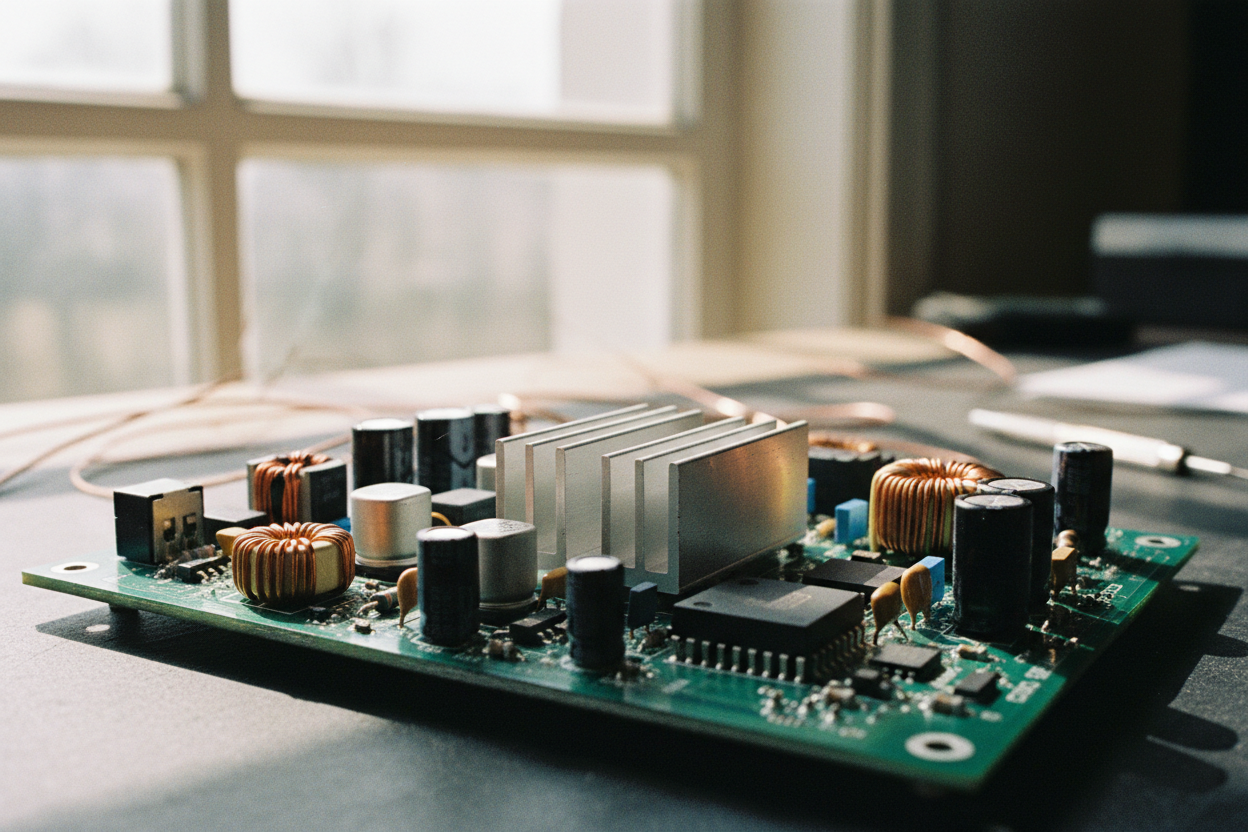
Motor-Type Matching: Start by aligning the controller with the motor topology. BLDC motors pair with ESCs that handle either sensorless back-EMF detection or sensored inputs via Hall sensors for reliable low-speed starts and precise torque. Brushed DC motors favor H-bridge drivers, delivering forward, reverse, and braking with straightforward PWM control. Stepper motors need dedicated stepper drivers supporting microstepping to reduce vibration and increase resolution, sometimes with closed-loop encoders for missed-step detection. Servos integrate motor, driver, and feedback, but advanced builds may combine a motor with a dedicated driver and external PID. Consider application dynamics: high-inertia loads benefit from sensored BLDC or closed-loop stepper solutions, while simple conveyors or pumps may thrive on brushed DC drivers. Evaluate whether you need regenerative braking, holding torque, or ultra-smooth low-speed motion. Matching type to task ensures your controller's algorithms and current delivery map cleanly to the motor's electromagnetic behavior.
Electrical Sizing Essentials: Correct electrical sizing prevents brownouts, overheating, and early failures. Match the controller's voltage rating to your supply, allowing margin for transients and back-EMF. Size continuous and peak current against the motor's stall current and duty cycle; peaks may be short but must be supported without triggering overcurrent or thermal limits. Pay attention to switching frequency, dead-time, and current ripple, as these influence noise, efficiency, and smoothness. Plan for thermal management with heatsinks, airflow, or thermal vias, and confirm the driver's efficiency across your operating range. Account for inrush and startup conditions; features like soft-start, current limiting, or torque ramping help avoid supply sag. If your controller offers a BEC or auxiliary regulator, ensure it can power receivers, sensors, or logic without overstress. Include proper decoupling capacitors, short high-current paths, and adequate wiring gauge to keep voltage drops and EMI under control.
Control, Tuning, and Protection: Interfaces define how you command motion and gather insight. Simple PWM or analog inputs are fast to deploy, while UART, CAN, or SPI grant telemetry, configurability, and networked control. For BLDCs, advanced FOC (Field-Oriented Control) yields quieter operation and higher efficiency, especially under varying loads. Closed-loop strategies use encoders, Hall sensors, or sensorless observers for robust speed, torque, or position control, often layered with PID or cascaded current–speed loops. Prioritize protections: overcurrent, short-circuit, overtemperature, undervoltage lockout, and reverse polarity save hardware and time. Look for brake and coast modes, regenerative handling, slew-rate limiting, and fault reporting to streamline tuning. Safety interlocks, watchdogs, and configurable ramp profiles prevent shocks to mechanical systems. Thoughtful tuning—current limits, loop gains, and filters—turns raw electrical power into smooth, predictable motion that respects bearings, belts, and batteries alike.
Integration Checklist and Best Practices: Reliable builds hinge on sound integration. Use star grounding, short high-current loops, and twisted pairs for phases or motor leads to reduce EMI and ringing. Add flyback diodes or integrated recirculation paths for brushed DC, and consider snubbers or ferrites for long cables on BLDCs. Validate connectors, fuses, and disconnects sized for peak currents, and confirm isolation where human touch or noisy grounds are concerns. Plan heatsinking and airflow early; layout and mounting dramatically affect thermal headroom. Calibrate sensors, verify direction, and confirm failsafe behavior on loss of signal or power. Prototype with a conservative current limit, then expand to full load while logging temperature, bus voltage, and fault flags. A simple workflow—identify motor type, define control mode, size voltage and current, select interface and protections, and verify thermals—keeps projects on schedule. With these practices, choosing the right ESC or driver becomes a structured, low-risk step toward dependable motion.