Better Sound on a Budget: Headphones, Speakers, and Settings
Unlock richer audio without overspending: choose value headphones and speakers, tune EQ, room setup, and streaming settings for clean, immersive sound.
Start With Priorities and the Signal Chain
Better sound on a budget starts with clear priorities and a basic map of the signal chain. Everything you hear travels from source to DAC, through amplification, and finally to the transducer that turns electricity into sound. On limited funds, focus first on the transducer, whether headphones or speakers, because it shapes the largest share of your listening experience. Define how and where you listen: a laptop at a desk, a phone on the go, or a small living room. This tells you whether nearfield speakers, closed headphones, or portable wireless options make more sense. Set a firm budget, including small extras like stands, pads, or tips, which often have an outsized impact. Think in steps rather than an instant overhaul; one wise upgrade at a time is more effective than scattering money across too many average pieces. Finally, protect your ears. Safe listening levels preserve the very thing you are trying to enjoy, and no upgrade beats healthy hearing.
Choosing Headphones That Punch Above Their Price
Great budget headphones are about matching design to use case. For private listening or shared spaces, closed-back models isolate outside noise and keep sound in, while open-back models trade isolation for a wider soundstage that feels more spacious. Look at impedance and sensitivity to understand how easily they drive from a phone or laptop; efficient designs need less power, while high-impedance pairs may benefit from a modest amp or USB dongle DAC. Comfort is performance, too. Good clamp force, breathable pads, and light weight let you listen longer without fatigue. For in-ears, a proper seal is everything, so experiment with different ear tips in silicone or foam to balance comfort, isolation, and bass. If you prefer wireless, check for stable Bluetooth codecs and battery life, but remember that a wired connection still delivers reliable quality for less. Trust your ears with familiar test tracks, and aim for a balanced tuning that avoids excessive boom or harsh treble.
Getting More From Budget Speakers and Desktops
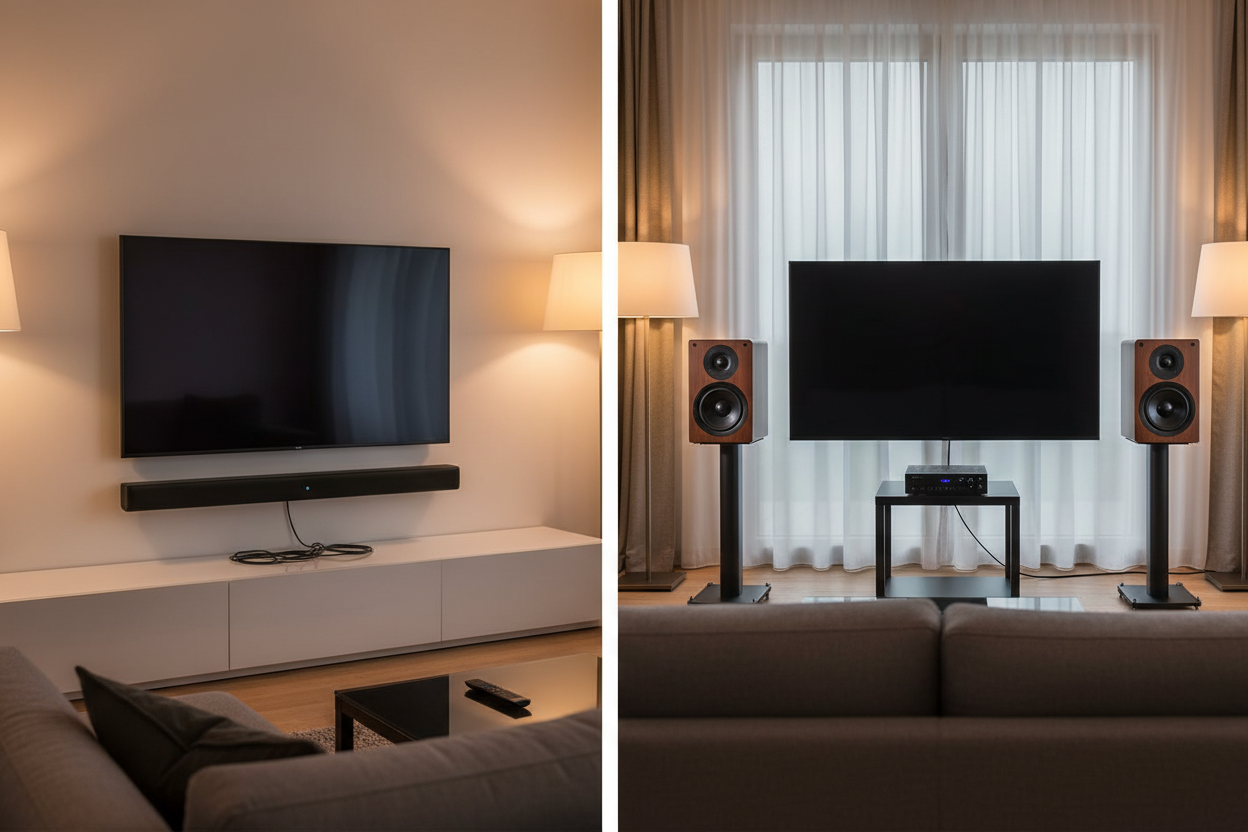
When desk space or rooms are small, bookshelf speakers or compact powered monitors can be stunningly capable. Active models include amplification that is matched to the drivers, simplifying setup and stretching your dollars. If you own a separate amp, efficient passive speakers can also be a smart path. Size matters, but bigger is not always better; match driver size and cabinet volume to room dimensions to avoid boomy bass or thin mids. For computer listening, sit nearfield and form an equilateral triangle with the speakers at ear height. A modest subwoofer adds depth, but only if you can place and level-match it carefully. Simple isolation pads or stands reduce desk resonance and improve clarity for very little cost. Pay attention to sensitivity numbers if you use a low-power amp, and leave a little headroom to avoid distortion. Aim for honest, neutral speakers rather than ones that hype bass or treble, so that your EQ and placement work more predictably.
Placement, Room Basics, and Free Acoustic Wins
Great speakers can sound average in a bad room, and modest speakers can shine with smart placement. Start with equal distance from your listening position, tweeters at ear height, and a gentle toe-in so the drivers fire just past your shoulders. Give cabinets some breathing room from walls to reduce boundary gain and muddy bass; even a few inches can help. Treat first reflections from side walls and hard desks with soft surfaces like curtains, rugs, or foam to tame high-frequency glare. If you add a sub, try the subwoofer crawl: place the sub near your seat, play bass-heavy music, walk the room, and note where bass sounds even; put the sub there. Decouple speakers from furniture with isolation to reduce vibration and smearing. On a desk, pull monitors forward to minimize desk reflections, and angle them slightly up with wedges. None of these steps require much money, but together they unlock cleaner imaging, tighter bass, and better dynamics.
Dialing In Device, App, and EQ Settings
Your devices can make or break the value of your hardware. In your operating system, set a sensible sample rate and bit depth, and disable stackable enhancements that add unwanted coloration. In media apps, choose higher streaming quality and enable gapless playback. Use volume leveling or replay gain to compare tracks fairly without cranking the loud ones. For precision shaping, a parametric EQ beats a simple bass and treble knob; a few careful filters can smooth shouty mids, tame sibilance, or lift a rolled-off treble. For headphones, subtle crossfeed can reduce hard left-right panning and add a speakerlike feel. Gamers and movie fans can try spatial audio modes, but keep an ear out for artifacts and dial them back if they smear detail. If you use USB audio, consider exclusive mode in your player to bypass system resampling. Most important, make small adjustments, listen for a few days, and keep notes to avoid chasing your tail.
Maintenance and Smart Upgrades Over Time
Sound quality grows through care and small, targeted improvements. Replace worn ear pads or tips to restore seal, comfort, and frequency balance; this one change often feels like a new pair. Keep grills and ports free of dust, and avoid moisture that can degrade drivers. Do not overspend on cables; reliable and well-shielded is enough, while dramatic claims rarely match reality. If your computer's headphone jack is noisy, a modest USB DAC can lower hiss and improve channel balance. For libraries you own, choose lossless formats when possible, and organize tags so your player handles replay gain and sorting cleanly. Keep a short playlist of reference tracks to evaluate changes consistently. If a future upgrade tempts you, prioritize the component that limits your chain most, not the flashiest spec. Above all, cultivate good listening habits: sane volumes, short breaks, and focused sessions. That discipline, paired with patient upgrades, delivers long-term value that outlasts trends.